
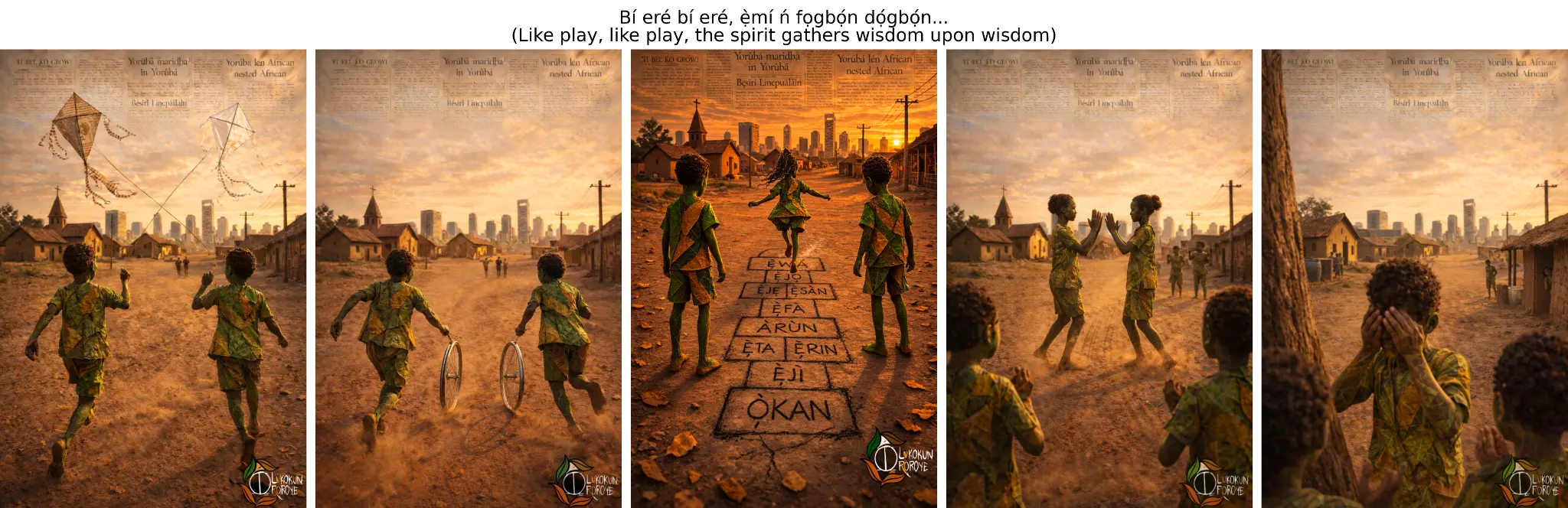
Second Collection · Five Essays
Bí eré bí eré
ẹmí ń fọgbọn dọ́gbọ́n...
Like play, like play, the spirit gathers wisdom upon wisdom
A five-part mixed-media series examining African childhood play as the early architecture of governance — hierarchy, cooperation, competition, risk, and restraint — through figures constructed from layered Thaumatococcus Daniellii leaves on landscapes of Gari, Raffia reed and African newsprint.
Echoes of African Childhood
"Play is not the opposite of work. Play is the rehearsal for governance — the first space where hierarchy, cooperation, competition, visibility, risk, and restraint are negotiated without consequence."
This series reframes African childhood play not as nostalgia or innocence but as the foundational architecture of social systems. Each of the five pieces examines a specific Yoruba game — kite-flying, hoop-rolling, hopscotch, clapping, and hide-and-seek — and reveals how these games rehearse the structures of governance that children will inherit as adults.
The figures are constructed from layered Thaumatococcus Daniellii leaves and organic adhesives, their hair formed from black Vertisol soil, their facial features deliberately removed to prevent portraiture and sentiment. They are not individuals but archetypes — bodies that appear grown rather than assembled, eroded rather than illustrated.
The landscapes are built from Gari, Raffia reed and African newsprint — the staple food and the daily record of a continent — forming structural horizons against which the city skyline rises, bridging the rural compound and the urban future. The material language is political, not artisanal: every element carries the weight of its origin.
Asadi
Kite Flying
"Ọ̀mọ tí ó bá mọ ọwọ́ wẹ̀, yóò bá àgbà jẹun" — The child who learns to wash their hands will dine with elders.
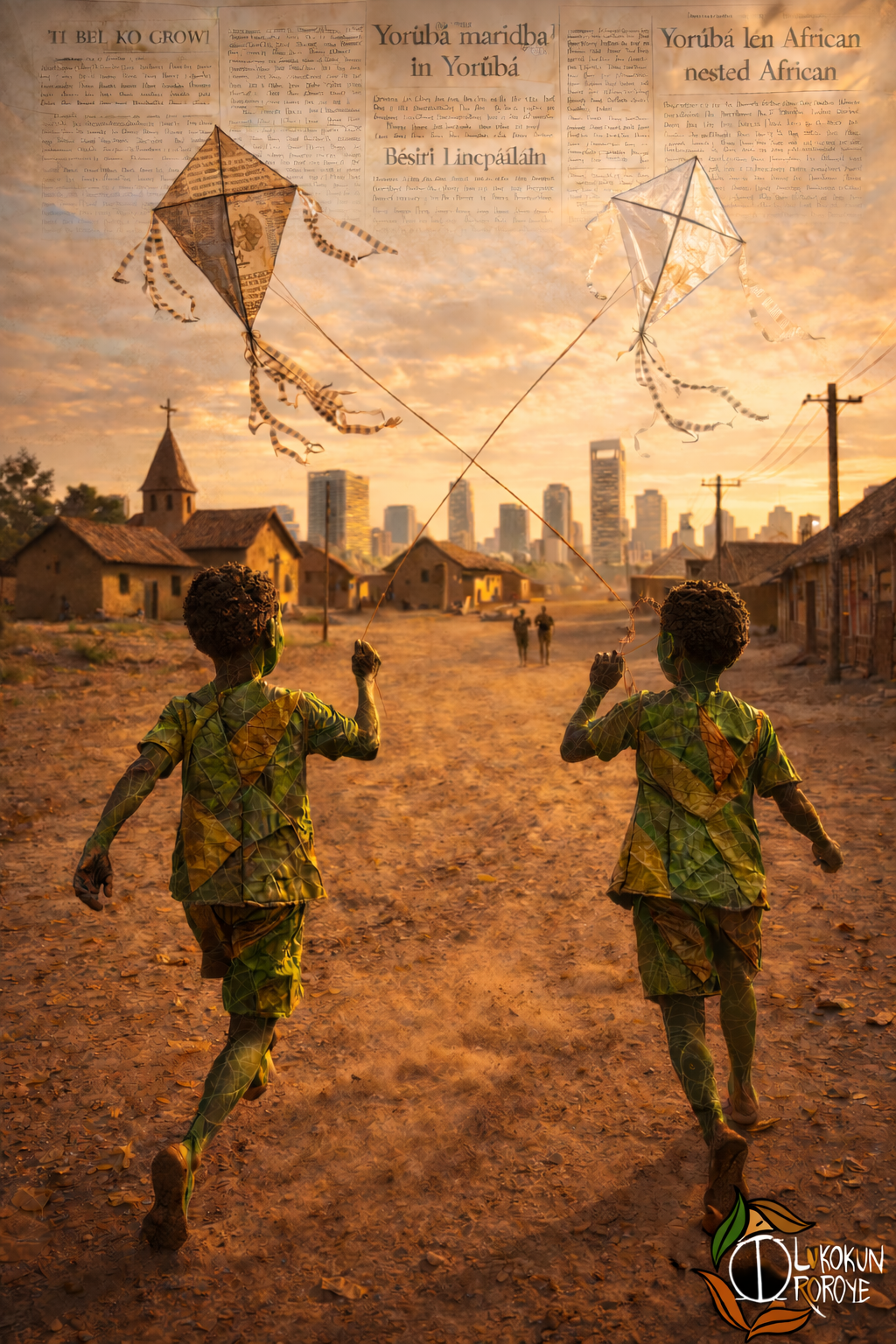
Two leaf-clad boys run through a dusty village street, their newspaper kites climbing against a sky layered with African newsprint. The cityscape rises behind them — a reminder that the games of childhood carry forward into the structures we build as adults. Asadi captures the paradox of play: the kite flies because the string holds it. Freedom and restraint are not opposites but partners. In Yoruba thought, the child who flies a kite learns that ambition without grounding is merely drift.
Magbékékelò
Hoop Rolling
"Ẹ̀sọ̀ ẹ̀sọ̀ ni ìgbín fi ń gun igi" — Slowly and steadily is how the snail climbs the tree.
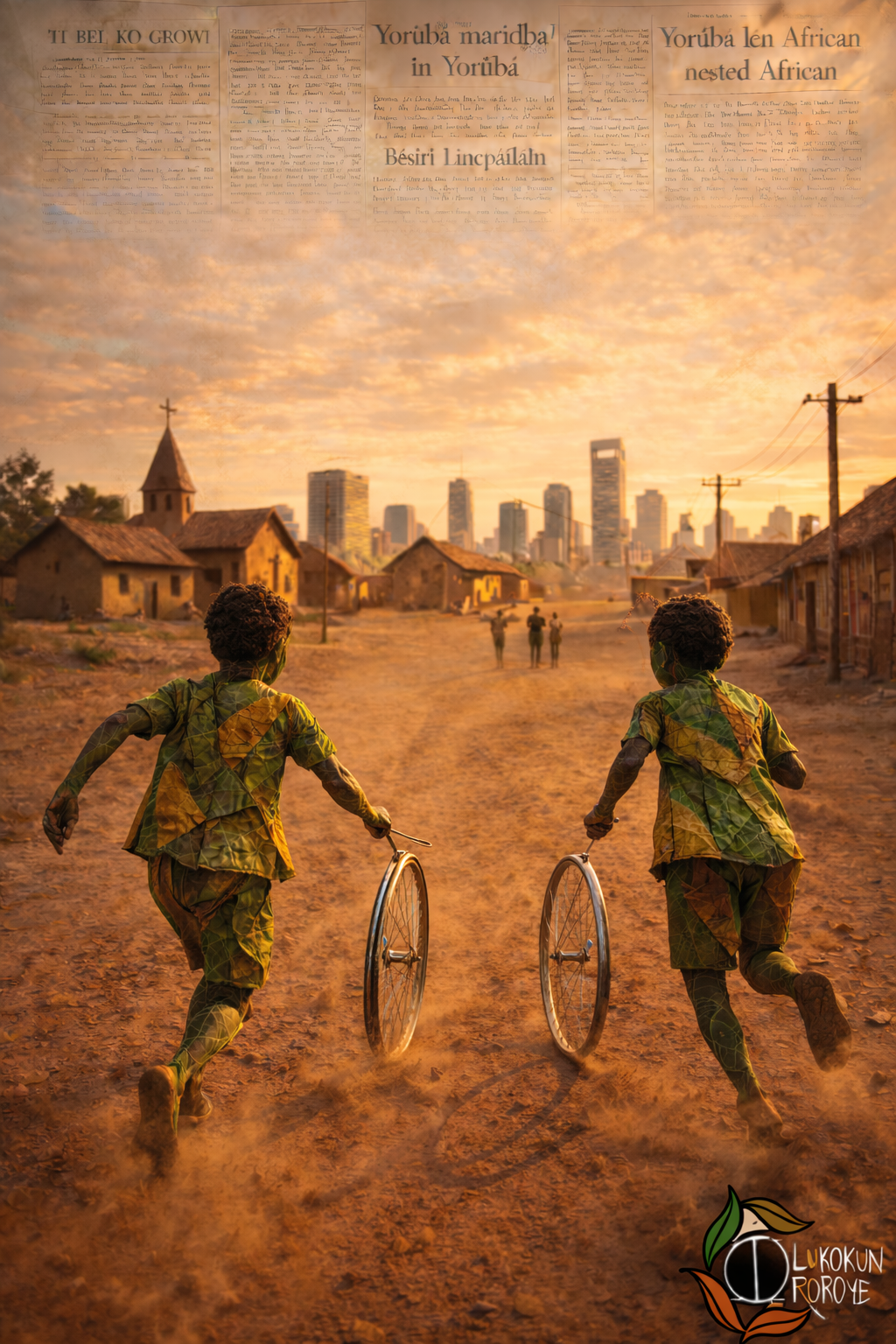
Two boys race down a red-earth road, each guiding a bicycle wheel with a stick — the universal game of hoop rolling that appears across African, European, and Asian childhoods. The figures, constructed from layered Thaumatococcus Daniellii leaves, appear to grow from the landscape itself. Magbékékelò is a meditation on velocity and control: the child who masters the hoop learns that leadership is not about force but about maintaining rhythm. The wheel does not obey the stick — it responds to timing.
Suwé
Hopscotch
"Ọ̀gbọ́n ju agbára lọ" — Wisdom is greater than strength.
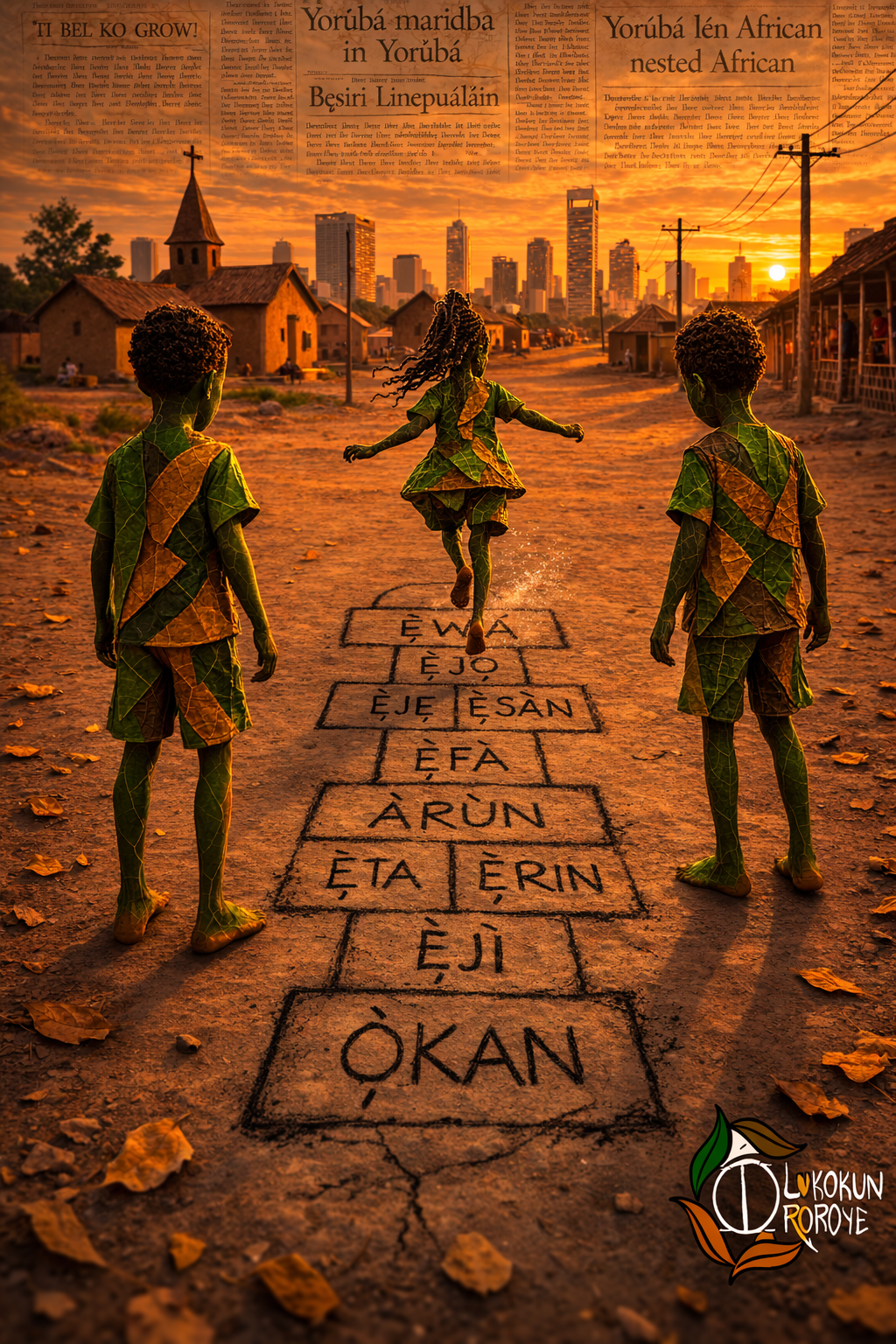
A girl leaps across a hopscotch grid inscribed with Yoruba numerals — Ọ̀kan, Èjì, Ẹ̀ta, Ẹ̀rin, Àrùn, Ẹ̀fà, Èje, Ẹ̀sàn, Ẹ̀jọ, Ẹ̀wá — while two other children watch and wait their turn. The game of Suwé is a rehearsal for navigation: each square demands balance, each jump requires calculation. In this work, the numbered grid becomes a metaphor for the systems of order that every society constructs. The child who plays hopscotch learns that the world is divided into spaces you can occupy and spaces you must skip — and that the rules are drawn by those who came before.
Bàtà (Ten Ten)
Clapping Game
"Ọwọ́ kan kò gbọ́n, àfi ọwọ́ méjì" — One hand does not make a sound; it takes two.
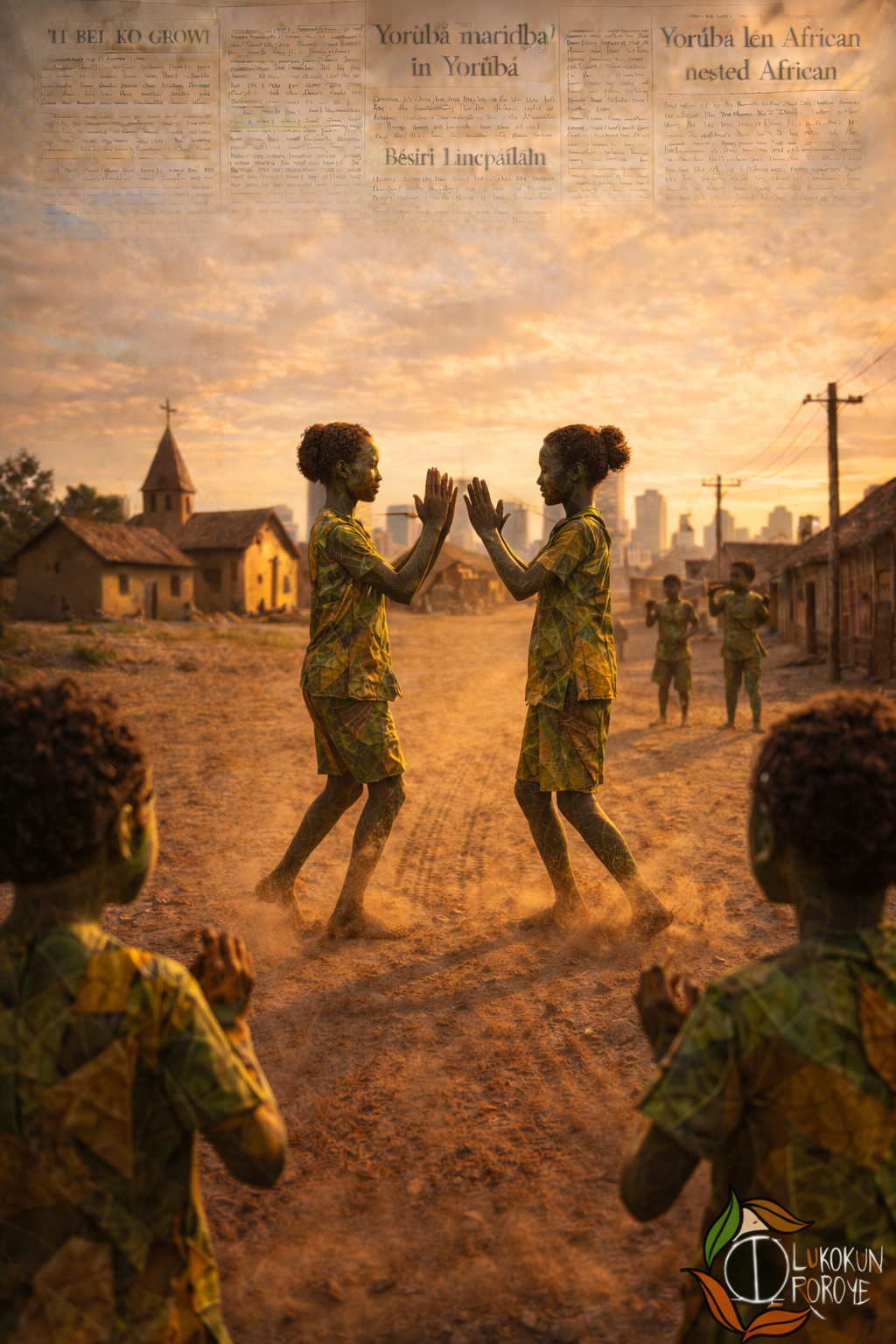
Two girls face each other in the golden dust, their palms meeting in the precise choreography of a clapping game. Behind them, other children echo the rhythm. Bàtà — named for the sacred Yoruba drum — frames the clapping game as the earliest form of social contract: two people agreeing on a pattern, maintaining it through repetition, and correcting each other when the rhythm breaks. The work argues that cooperation is not natural but practised, not instinctive but learned through the disciplined play of childhood.
Bò jú Bò jú O
Hide and Seek
"Ojú akọni ti rí ìdààmú kó tó já sí ọlà" — The courageous one faced challenges before finding fortune.
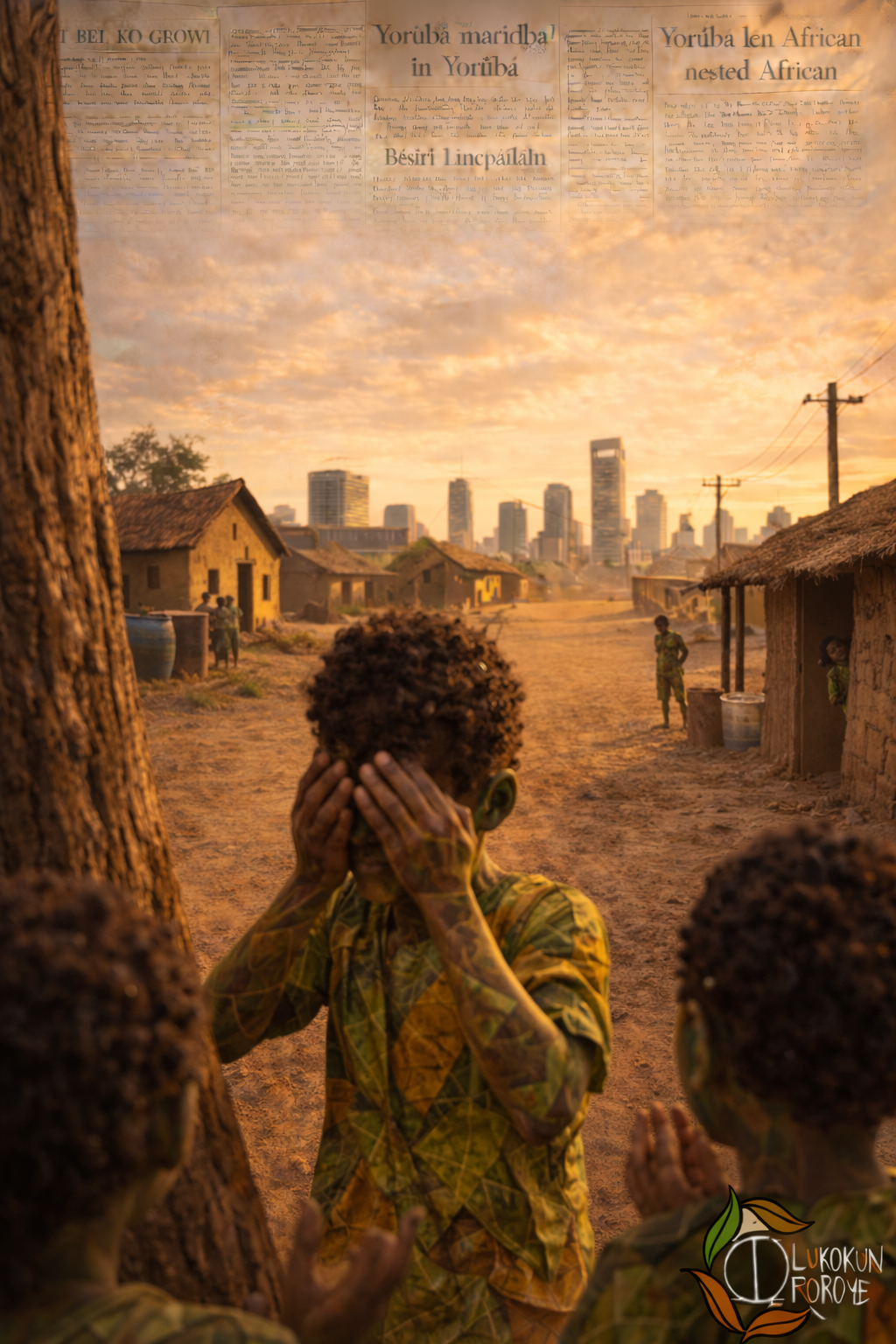
A child covers their eyes and counts while others scatter into the compound — the universal game of concealment and discovery. Bò jú Bò jú O examines the politics of visibility: who gets to hide, who is forced to seek, and what happens when the hidden are found. In Yoruba culture, the phrase carries a deeper resonance — it speaks to the masks we wear, the selves we conceal, and the courage required to be seen. The child who plays hide and seek learns that disappearance is temporary, that every hidden thing is eventually revealed.
Critical Framing
Play as Labour, Not Leisure
This work resists the romanticisation of childhood as innocence or refuge. Play, in these compositions, is labour — repetitive, rule-bound, corrective. The games depicted are not escapes from the adult world but rehearsals for it. The child who flies a kite is learning about tension and control. The child who plays hopscotch is learning about territory and sequence. The child who hides is learning about visibility and power.
The material language reinforces this reading. The figures are not painted or drawn but constructed — built from organic matter that carries its own history of growth, decay, and transformation. The Thaumatococcus Daniellii leaves, in various stages of life, give the bodies a quality of having been grown rather than made. The gari landscapes and newsprint skies are not decorative backdrops but structural elements that locate these games within specific economic and informational ecologies.
By removing facial features, the work neutralises the sentimental gaze. These are not portraits of specific children but archetypes of a universal experience — the experience of learning, through play, how the world is organised and how one might navigate it.
Philosophy of Form
Why Are the Figures Made of Leaves?
Every human figure in these works is rendered in the texture of leaves. This is not a stylistic choice — it is a philosophical one. We share a unified humanity because of our absolute dependence on ecology to survive. The impermanence of life is a by-product of sustainability — nothing in nature is permanent, and that impermanence is precisely what allows the cycle of life to continue.
The best representation of this truth is the leaf. A leaf is born green, full of chlorophyll and the energy of youth. It grows and matures into yellow, carrying the warmth of experience. It ages into brown, returning its nutrients to the soil from which it came. And from that soil, new life emerges. The cycle completes. The human characters in these works move through these same stages — we are all leaves on the same tree.
Why Five Pieces?
A Homage to Shared
Human Architecture
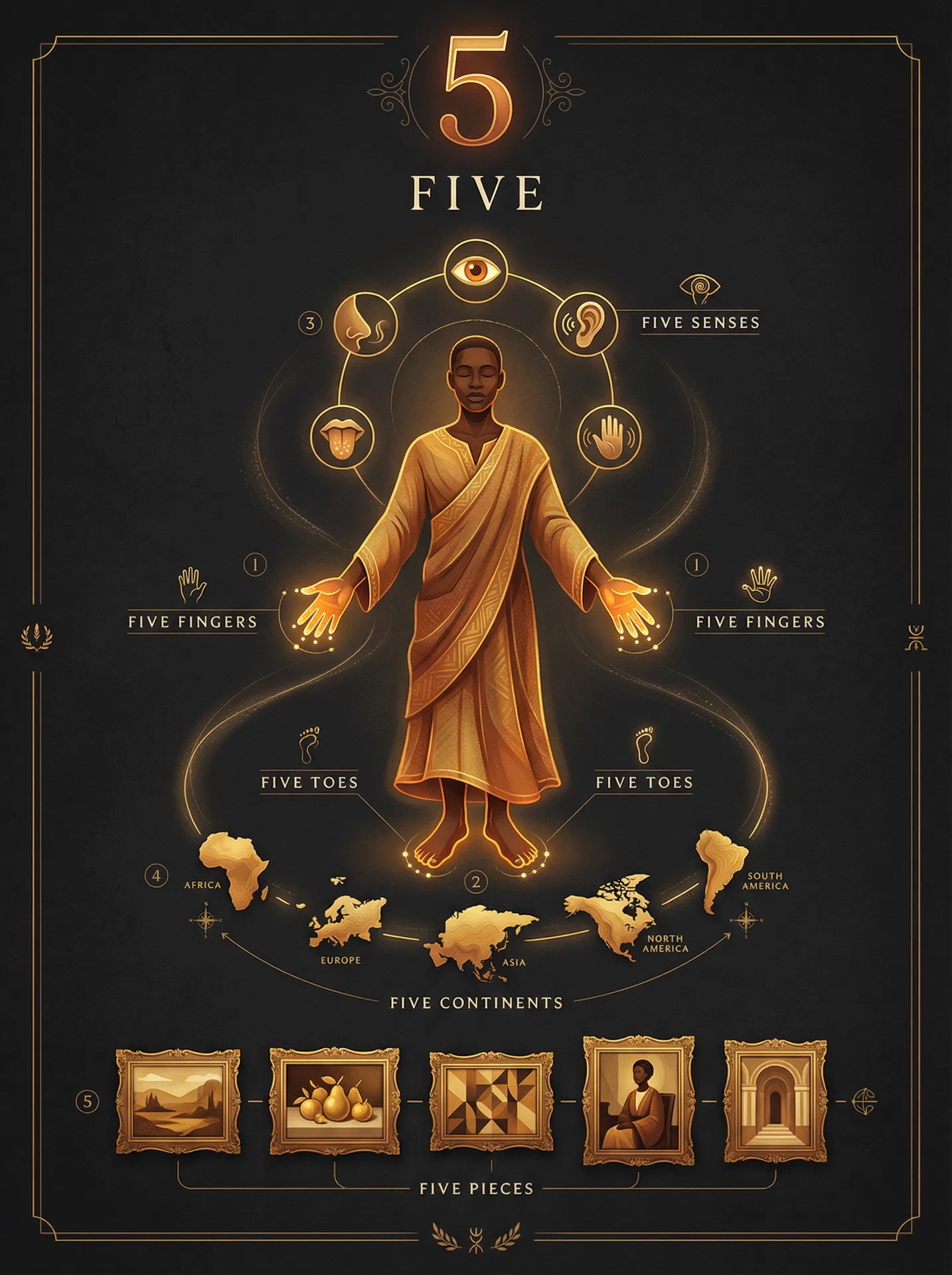
Each collection contains exactly five pieces — a deliberate reference and homage to all human beings and their shared association with the number five. Five fingers on each hand, five toes on each foot, five senses through which we experience the world, five continents across which we live.
The number five is a universal constant, a biological truth written into every human body regardless of race, culture, or geography. By producing five pieces for each subject matter, the work honours this shared architecture — each piece a finger on the same hand, a sense through which we perceive the same world.
Status
Work in Progress
Bí eré bí eré exists at present as an essay series with graphic illustrations. The physical mixed-media installations are currently in development.